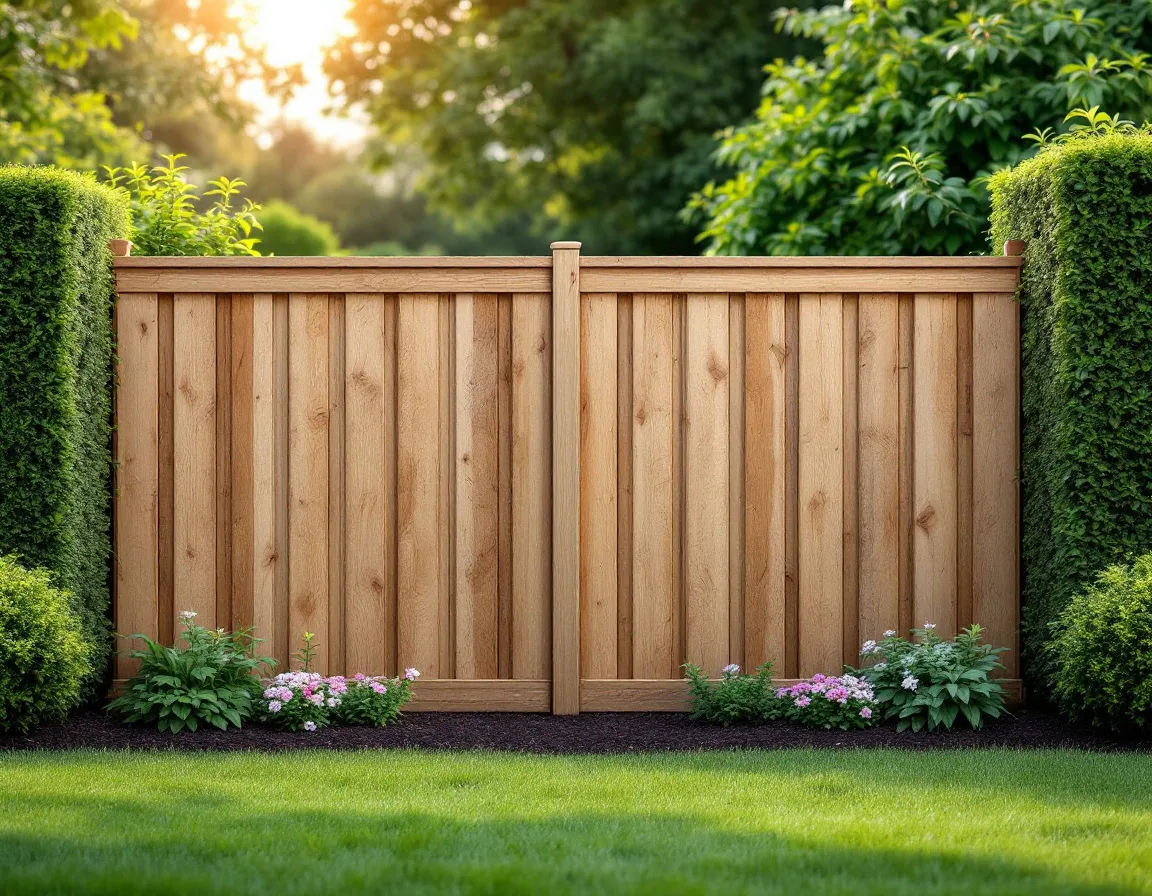
Before you put up a new fence, check the height rules. A fence that breaks them can lead to a request from your council to take it down. This guide covers England first, then Wales and Scotland.
How high can a fence be without planning permission?
- Up to 2 metres on most boundaries, such as rear and side fences, under permitted development.
- Up to 1 metre next to a highway used by vehicles. The Planning Portal says this includes the footpath of that highway.
- No taller than before if you replace a fence that already stands above the limit.
The limit runs from ground level. Count the gravel board and any trellis as part of the total height, and ask your council if the ground slopes. For example, a 1.8m fence with 0.3m of trellis is 2.1m, which is over the 2m limit on a rear boundary.
The same limits cover gates and walls as well as fences. The Planning Portal says this applies to structures that are next to a highway or on any other boundary. Therefore, check a new gate against the same numbers.
When you do need planning permission
- The fence would be over 2m, or over 1m next to a vehicle highway
- Your home is a listed building or in its curtilage, or your boundary adjoins a neighbouring listed building
- An "Article 4 direction" removes your permitted development rights, which is most common in conservation areas
- A condition on the original planning permission removes the right to put up fences
Replacing, repairing and taking down
You can repair, maintain or improve an existing fence without raising its height. The rules say the height cannot go above the old height or the usual limit, whichever is greater. As a result, you can replace a fence that is already over the limit, as long as the new one is no taller.
Taking a fence down is different in a conservation area. The Planning Portal says you may need permission there, so check before you remove one. Hedges are different again, because you do not need planning permission for a hedge as such.
Wales and Scotland
Although the rules differ by nation, Wales uses the same two limits. The Welsh Government says you need permission for a fence over 1 metre next to a highway used by vehicles, or over 2 metres elsewhere.
Scotland differs in some ways. According to mygov.scot, a fence around a house cannot be higher than 2 metres, or 1 metre if it faces a road or extends past the front or side of the house. You also cannot use these rights in a conservation area or in the grounds of a listed building. For Northern Ireland, ask your council, because the guidance we checked does not cover it.
What about my neighbour's view or light?
The height limits above do not depend on your neighbour's view. They apply to the fence itself. For example, a 1.9m fence on a rear boundary is within the 2m limit even if it blocks a view.
However, a dispute over where the fence stands is a separate matter, and your deeds decide that. Talking to your neighbour first can save trouble later.
Measuring your fence
Measure at the tallest point, because the limit applies to the height above ground level. If the ground slopes, the height changes along the run. Therefore, ask your council how it measures a sloping boundary before you order materials.
Always check locally
Rules can vary, especially in conservation areas, so check with your local planning authority if in doubt. The Planning Portal guidance covers England only, while Wales and Scotland publish their own.