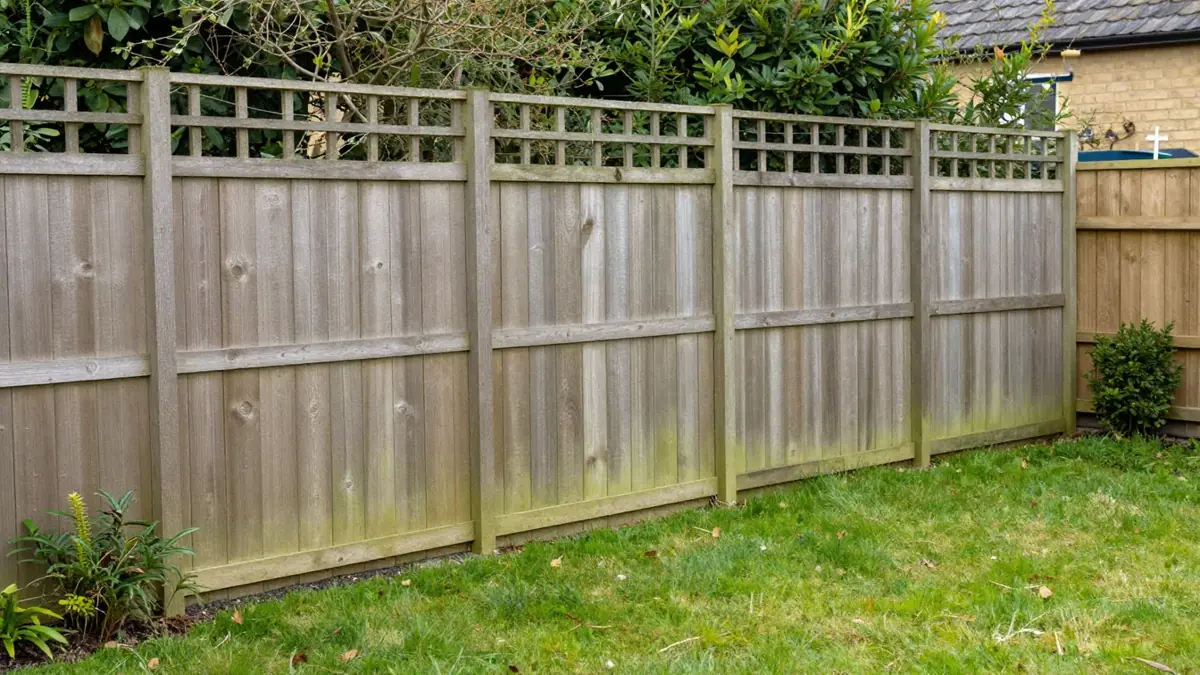
Planning permission for fences
You can generally put up a fence without planning permission. The Planning Portal says you can build a fence up to 2 metres high. You must not exceed 1 metre if the fence sits next to a highway.
However, local rules may also apply, so check with your local planning authority. Some areas have exceptions for listed buildings or specific development rights. You should consult your local planning department before you extend any existing fence.
For example, Runnymede Council and the Royal Borough of Kensington and Chelsea both advise consulting the planning team before extending a fence. You should also check the planning permission for fences to ensure your changes meet local rules.
Some people wonder if toppers or trellises count towards the height limit. The Planning Portal does not say if these add to the height. While you can build up to 2m, always check with your local planning authority to avoid any legal issues.
Deterring foxes from your garden
Foxes can squeeze through a gap as small as 10cm square. Hastings Borough Council says a fox can scale a 6ft (2m) fence or wall with ease. Therefore, height alone might not keep them out of your garden.
Wandsworth Council suggests a barrier at least 2m high. They recommend a 30cm overhang at the top. You should also bury the barrier at least 45cm deep. In contrast, Bolton Council suggests a burial depth of 30cm.
Wandsworth Council says flexible trelliswork on top will discourage foxes from climbing over. Additionally, you might use solid weld-mesh with holes at least 4cm wide. The RSPCA advises avoiding flexible netting that can trap wildlife.
The RSPCA suggests you remove food and shelter to discourage foxes. You should secure your bins and composters. You should also clear fallen fruit and pet food from the ground.
Using legal repellents
GOV.UK (Natural England) says you must only use repellents and deterrents approved for use against foxes. Bristol City Council says it is against the law to use non-approved products like creosote or diesel oil. Similarly, the RSPCA warns that using unapproved substances as a deterrent is illegal.
Bristol City Council names several approved products. These include Scoot, Catapult, and Ready to use Stay Off. You can also use Johnson's Clear Off or B&Q Animal Repellent. These products often contain aluminium ammonium sulphate.
Repellents are not a foolproof solution. You will likely need to re-apply them constantly for weeks. Since none are foolproof, you should view these products as a last resort for your garden.
Managing cats in your garden
Cats have a legal right to roam. The Animal Welfare Act 2006 protects them from unnecessary suffering. Cats Protection says injuring or harming a cat with any deterrent could be considered an offence under the Act. The RSPCA says not to use snares, poison or traps designed to injure.
Cats Protection suggests using a high, close-boarded fence next to hedging. This makes it difficult for cats to enter. You can also use dense planting, lavender, or citrus peel to deter them.
Additionally, you can use motion-triggered water sprays. The RSPCA advises you to aim the spray near the cat rather than directly at it. You should always leave an escape route, such as a gap under a gate. This ensures visiting cats do not get trapped in your garden.
If you want to secure the perimeter, you can compare local quotes for new fencing. You can also use our fence cost calculator to plan your budget. Proper fencing helps you maintain a secure and private space.
Sources
- Planning Portal: Fences, gates and garden walls: planning permission
- Planning Portal: What are the height restrictions for fences, gates and garden walls?
- Runnymede Borough Council: Foxes
- Royal Borough of Kensington and Chelsea: Urban foxes
- Wandsworth Council: Pest control: advice on discouraging foxes (appendix, Deterring and discouraging foxes)
- Bolton Council: Urban foxes (leaflet)
- Hastings Borough Council: Urban foxes: information and advice
- Southwark Council: Urban foxes